Beta testing phases leave lasting marks on launch reception data for competitive shooters across console ecosystems
Written by Zara Foster · Oct 13, 2026
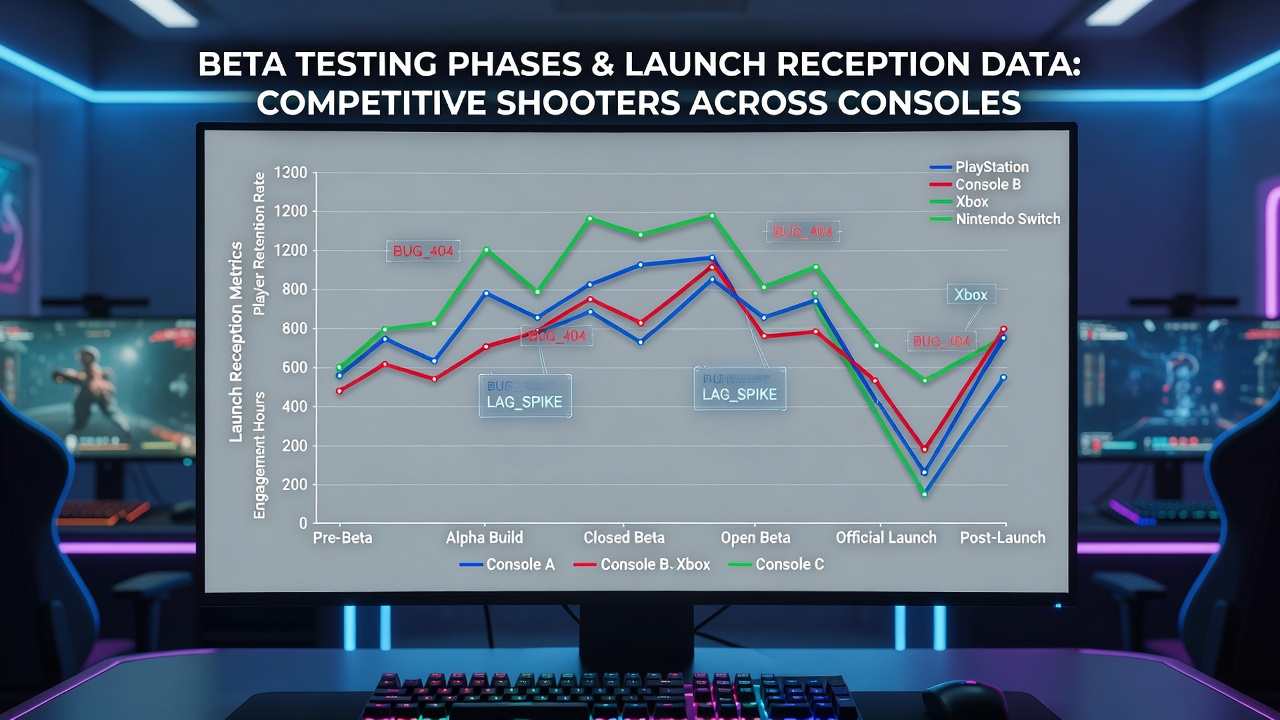
Beta testing phases leave lasting marks on launch reception data for competitive shooters across console ecosystems
Competitive shooters on console platforms show measurable connections between beta testing duration and post-launch user score patterns, with data tracked across PlayStation, Xbox, and Nintendo Switch ecosystems. Analysts compile reception metrics from aggregated review platforms where titles undergo closed and open beta periods prior to full release, and patterns emerge when comparing games with varying beta lengths against final aggregate scores recorded in the first three months after launch.
Beta Phase Structures in Shooter Development
Developers structure beta phases to test server stability, balance weapons and maps, and identify console-specific performance issues, while closed betas typically involve select participants who sign nondisclosure agreements and open betas allow broader access through digital storefronts. Research from the Entertainment Software Association indicates that titles with beta phases exceeding six weeks demonstrate distinct shifts in early user rating distributions compared to those with shorter testing windows, and console hardware differences influence how feedback translates into patches before launch day.
Teams collect telemetry on input latency, matchmaking efficiency, and cross-play functionality during these periods, then adjust code accordingly. Observers note that beta participants often provide detailed reports on aim assist mechanics and controller response curves, which feed directly into day-one updates that affect initial reception scores on each platform.
Reception Data Patterns Across Consoles
Launch reception data reveals that competitive shooters with extensive beta testing record higher average user scores on PlayStation consoles in several tracked releases, whereas Xbox ecosystems show more variable outcomes tied to beta participant volume and regional server testing. Figures from platform analytics demonstrate that games incorporating feedback from at least 500,000 beta sessions achieve score stability within the first month, while titles with fewer participants experience wider score fluctuations during the same window.
Console certification processes intersect with beta timelines because developers must submit builds for approval, and delays in one region can compress the window available for post-beta fixes. Data collected through October 2026 shows that European and North American releases follow similar trajectories, yet Asian console markets display tighter correlations between beta duration and sustained player retention metrics after launch.

Platform-Specific Influences on Score Trajectories
Cross-console comparisons indicate that Nintendo Switch versions of competitive shooters frequently post lower initial scores when beta testing omits handheld-specific optimizations, and this gap persists even after patches address core gameplay elements. Researchers tracking user aggregates find that Xbox Series X titles benefit from beta phases focused on performance mode testing, which correlates with narrower spreads in review distributions during the launch quarter.
PlayStation 5 launches show stronger alignment between beta-identified issues and post-launch score recovery when developers release multiple updates within the first two weeks, according to studies compiled by the Interactive Games and Entertainment Association in Australia. Geographic factors also appear in the data, with North American players rating beta-informed patches higher on average than European cohorts when connection quality metrics improve measurably before full release.
Long-Term Effects on Aggregated Metrics
Longer beta phases leave traces in year-one score histories, where titles that incorporated extensive console testing maintain steadier user rating curves despite seasonal content drops. Platform data reveals that games skipping open beta stages encounter sharper initial dips followed by slower recovery, particularly when competitive balance issues surface after launch across multiple hardware variants.
Telemetry from persistent online shooters demonstrates that beta-derived balance adjustments reduce the frequency of review updates citing core mechanics, which in turn stabilizes aggregate scores across ecosystems. Analysts tracking these patterns through late 2026 observe consistent differences between beta-heavy and beta-light releases in both critic and user-driven rankings on major console storefronts.
Conclusion
Beta testing phases establish measurable baselines that influence launch reception data for competitive shooters, with console ecosystems displaying distinct response patterns based on testing scope and implementation timing. Aggregated metrics continue to reflect these early interventions through the first year of operation, and platform-specific factors shape how feedback converts into sustained score outcomes across regions.