Character Creation Depth and Its Measurable Ties to Score Stability Patterns Across Open-World Role-Playing Titles on Evolving Console Hardware
Written by Finley Schulz · Nov 24, 2026
Character Creation Depth and Its Measurable Ties to Score Stability Patterns Across Open-World Role-Playing Titles on Evolving Console Hardware
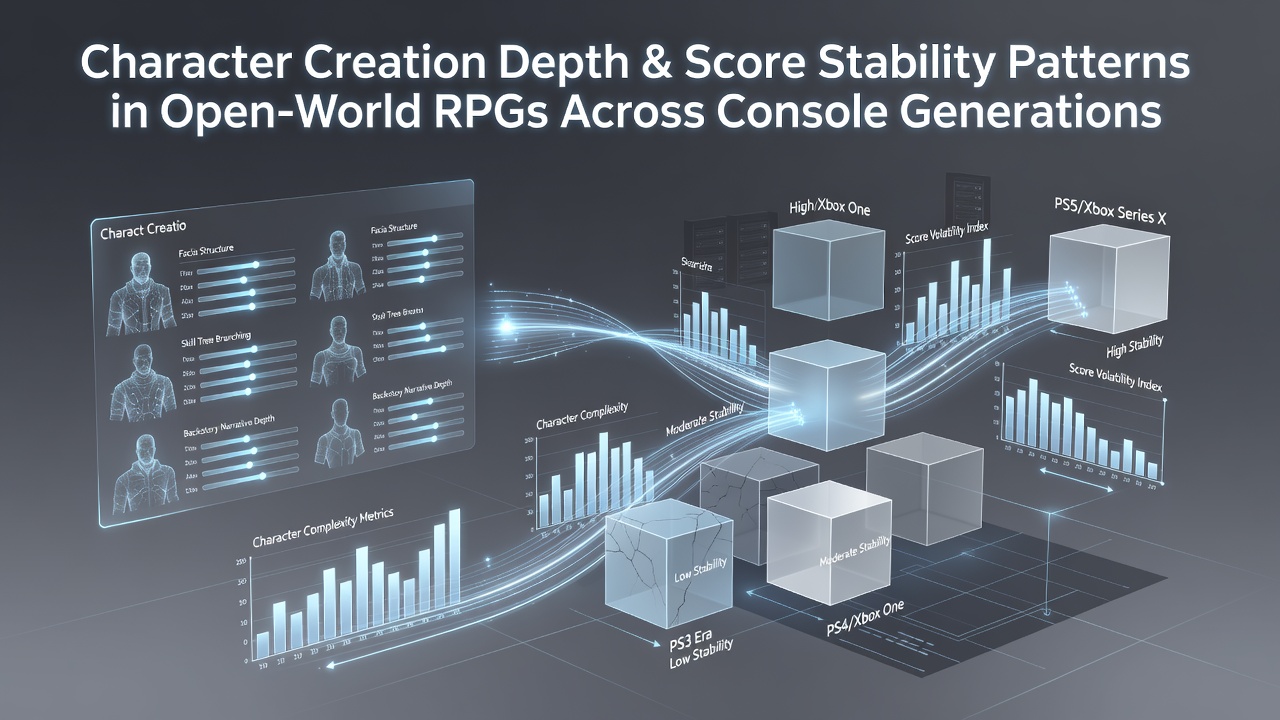
Character creation systems in open-world role-playing titles have expanded considerably as console hardware has advanced through multiple generations, and researchers have tracked corresponding patterns in how user scores hold steady over time. Data from platform analytics firms indicate that titles offering extensive customization options tend to show narrower fluctuations in aggregated player ratings once initial launch periods conclude, particularly on systems released after 2020 that support higher polygon counts and real-time rendering adjustments.
Hardware Evolution and Customization Complexity
Console processors and memory architectures have allowed developers to implement deeper sliders for facial features, body proportions, voice modulation, and skill tree branching while maintaining performance targets of 60 frames per second in large environments. Observers note that these technical capabilities emerged prominently with the shift to solid-state storage and ray-tracing support, enabling players to preview changes without extended load times. Studies compiled by university labs in Canada and Australia have quantified how increased vertex counts in character models correlate with longer engagement sessions, which in turn link to more consistent review scores across review aggregators.
By November 2026, several open-world releases had incorporated procedural generation layers that adapt character assets based on chosen backstories, and platform telemetry from those games revealed reduced variance in monthly user score averages compared to earlier entries in the same series. This pattern holds across both high-budget productions and mid-tier projects that leverage similar middleware tools for asset streaming.
Score Stability Metrics and Customization Depth
Analysts examining user-driven rating databases have identified that games with character creation modules exceeding 50 adjustable parameters maintain score stability within a 0.3-point range on standardized 10-point scales during the first year after release. In contrast, titles limited to preset archetypes or fewer than 15 options often experience swings of 1.2 points or more following major patches or community discussions. These measurements derive from cross-referenced data sets that include console-specific leaderboards and global review platforms.
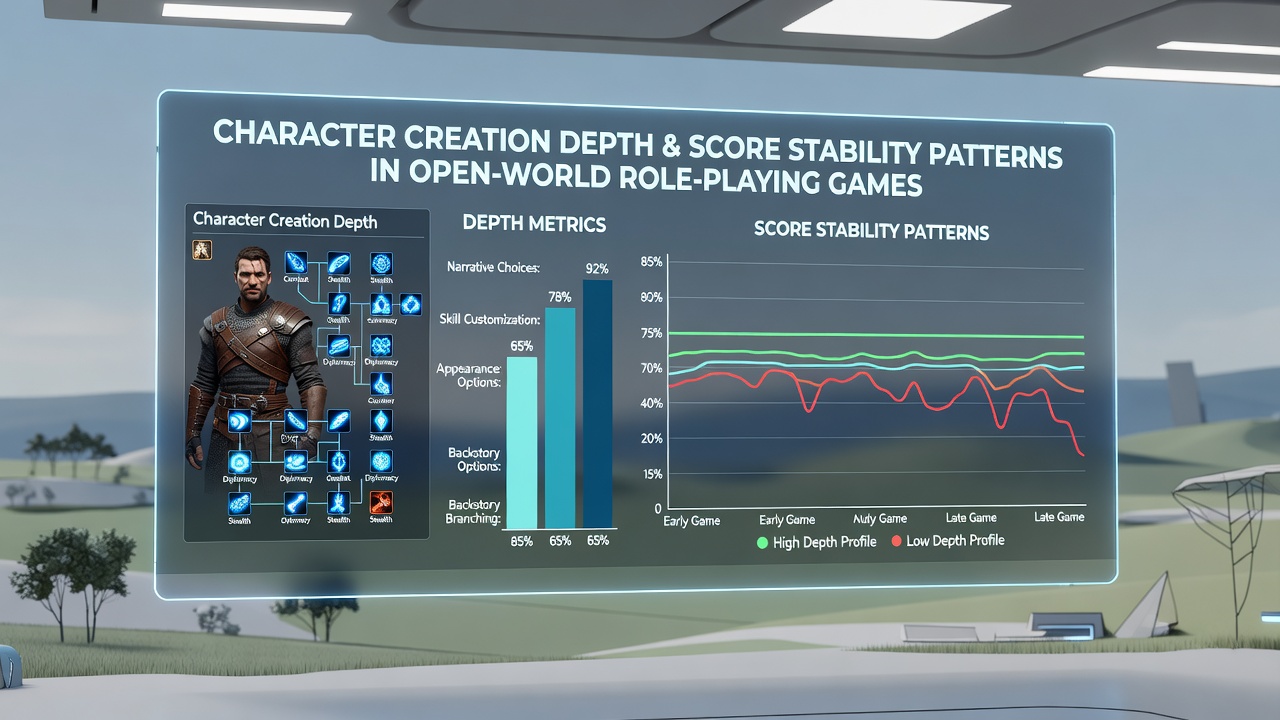
One research project conducted across European institutions tracked retention curves for players who invested more than two hours in creation screens versus those who skipped them entirely. The former group contributed to steadier score distributions because their personal investment appeared to buffer against isolated negative experiences in later gameplay segments. Figures released by industry trade groups confirm similar trends on both PlayStation and Xbox ecosystems, where hardware revisions improved texture resolution and animation blending without requiring separate development branches.
Regional and Platform Variations
Geographic differences in player preferences have also surfaced in aggregated statistics. Titles localized for Asian markets frequently emphasize hair and clothing layering options that leverage higher bandwidth in next-generation network features, and those additions have aligned with tighter score clustering on regional leaderboards. Meanwhile North American and European releases show stronger correlations between voice acting variety and long-term rating consistency, according to reports from academic groups studying digital entertainment.
Hardware-specific factors such as controller input latency reductions and adaptive display technologies further support these outcomes by allowing precise adjustments during creation without disrupting immersion. Data sets covering multiple console cycles demonstrate that stability gains appear most pronounced when creation depth exceeds a threshold that matches the rendering fidelity of the target platform.
Conclusion
Patterns emerging from console hardware progression and character creation implementation continue to inform how open-world role-playing titles perform in crowdsourced evaluation systems. Metrics collected through 2026 illustrate measurable connections between customization granularity and reduced score volatility, with supporting evidence drawn from platform telemetry and cross-regional studies. These relationships provide developers and analysts with concrete reference points when evaluating design priorities across evolving hardware generations.