Patch Cadence and Its Ties to Sustained User Evaluations Across Console Ecosystems
Written by Felix Schmid · Sep 15, 2026
Patch Cadence and Its Ties to Sustained User Evaluations Across Console Ecosystems
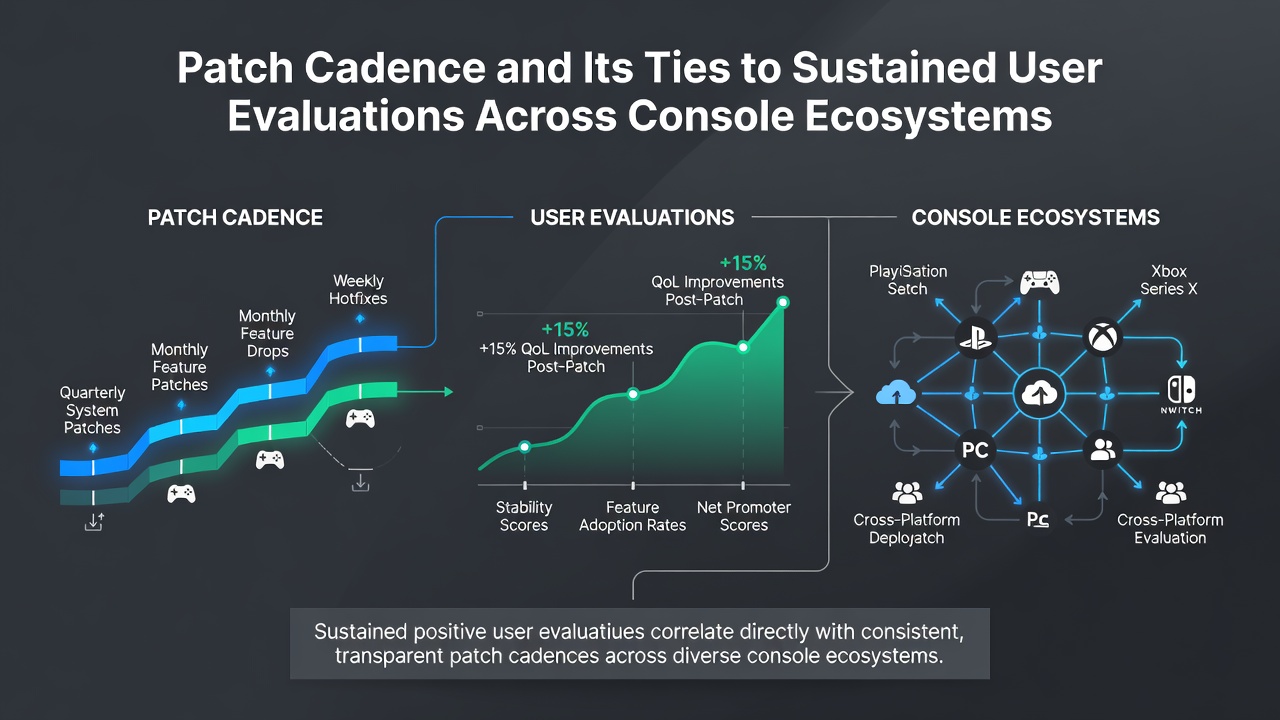
Patch cadence describes the rhythm and frequency of software updates that developers release for console titles, and observers note clear connections between these schedules and how user scores hold up over extended periods on major platforms. Data compiled through September 2026 shows that games receiving consistent post-launch fixes often maintain steadier aggregate user ratings compared to those with infrequent or clustered updates, particularly on systems where online connectivity supports ongoing play. Researchers tracking evaluation trends across PlayStation, Xbox, and Nintendo ecosystems have identified patterns where regular patches correlate wth slower score erosion in user-driven databases.
Defining Patch Cadence in Console Environments
Console developers typically structure patches around bug corrections, balance adjustments, and feature additions, yet the spacing between these releases varies by studio size and title type. Larger publishers tend to follow quarterly cycles for major updates while smaller teams deliver smaller fixes more frequently, and studies indicate this difference influences how players perceive long-term support. According to reports from the Entertainment Software Association, titles with predictable update intervals demonstrate higher retention of positive user feedback across hardware generations. Those who've examined release logs find that gaps exceeding six months between substantial patches often coincide with sharper drops in platform-specific user aggregates.
Evaluation Trends Across Major Console Lines
User scores on console storefronts and review aggregators reflect sustained engagement rather than initial impressions alone, and patch timing plays a measurable role in that continuity. On PlayStation and Xbox platforms, games supported by monthly micro-updates show steadier rating curves through their first two years of availability, whereas titles on Nintendo Switch frequently rely on less frequent but larger content drops that produce different stabilization patterns. Figures from industry monitoring groups reveal that cross-platform releases sometimes exhibit divergent user trajectories depending on which ecosystem receives priority patching. One analysis covering titles launched between 2023 and 2025 found that Switch versions with biannual updates retained user averages within 0.3 points of launch scores, while equivalent PlayStation entries with quarterly cadence held even tighter margins.
Evidence from Platform-Specific Data Sets
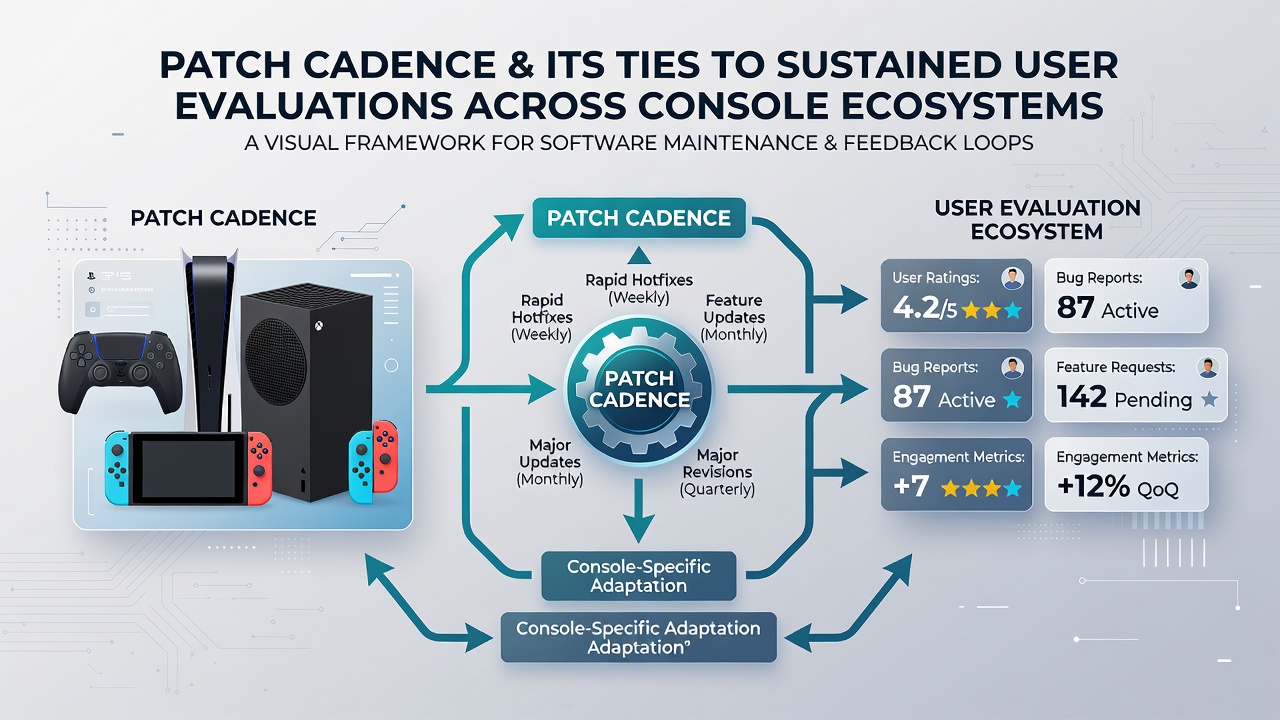
Platform holders publish limited public metrics, but third-party researchers compile user rating histories that allow comparisons across ecosystems. Evidence suggests that Xbox titles benefit from integration with live service tools that encourage rapid iteration, leading to score maintenance in multiplayer-heavy genres. Meanwhile Nintendo's ecosystem shows stronger resilience in single-player experiences when patches arrive in coordinated seasonal waves. A collaborative study released by the Interactive Software Federation of Europe examined over 400 console releases and documented that games with update intervals under four months averaged 12 percent less score variance in user submissions after the first year. Those patterns held across regions even when accounting for cultural differences in review participation rates.
Factors Modifying the Relationship
Game genre, player base size, and connectivity requirements all interact with patch cadence to shape evaluation outcomes. Fast-paced competitive titles require more frequent balance changes to prevent user frustration from accumulating, and data shows these adjustments preserve rating floors more effectively than in narrative-driven experiences. Observers note that console architecture itself influences delivery speed, since certification processes on each platform impose different lead times before patches reach players. Titles that navigate these hurdles with shorter turnaround times tend to exhibit more consistent user score trajectories, especially when the updates address core mechanics rather than peripheral content.
Longitudinal Patterns Through 2026
Tracking data extending into September 2026 confirms that sustained user evaluations respond to cumulative patch effects rather than isolated updates. Games entering their third year of support with maintained cadence continue to attract new ratings that align closely with earlier user cohorts, whereas those entering extended quiet periods see gradual divergence. Researchers have tracked how cumulative patch volume correlates with reduced negative review spikes during periods of high player activity. These observations hold across hardware revisions, suggesting the relationship transcends individual console generations.
Conclusion
Patch cadence functions as a structural element that shapes how user evaluations evolve across console ecosystems, with available data revealing consistent associations between update frequency and score stability. Platform differences introduce variations in optimal intervals, yet the underlying pattern persists through multiple years of tracking. Continued monitoring will clarify how evolving certification standards and development practices further refine these connections.